If your home in Tyler runs on a septic system instead of city sewer, you're in good company. Large parts of Smith County — from neighborhoods on the edge of town to rural properties out past the loop — were never connected to municipal sewer, and the people who live there rely on a septic tank and drain field every single day. Tyler Septic Pros is a service-area business built for exactly those homeowners. We handle septic tank pumping in Tyler, TX, along with cleaning, inspections, repairs, and new installations, and we come to you.
Why East Texas Septic Tanks Need Regular Pumping
Every time water goes down your drains, it lands in your septic tank. Solids settle to the bottom as sludge, grease and lighter material float to the top as scum, and the clearer water in the middle flows out to the drain field. Pumping removes the sludge and scum before they build up enough to clog your outlet baffle or wash solids into the drain field — which is how most expensive septic problems start.
Here in East Texas, tanks tend to need attention right on schedule, if not a little sooner. Our heavy clay soil drains slowly, and long stretches of Piney Woods rain can leave a drain field saturated for weeks at a time. When the field can't take water as fast as the house sends it, the whole system works harder. A routine pump-out every three to five years keeps solids where they belong and gives a technician the chance to spot small issues — a cracked baffle, a settling lid — before they turn into backups.
Our Septic Services in Tyler, TX
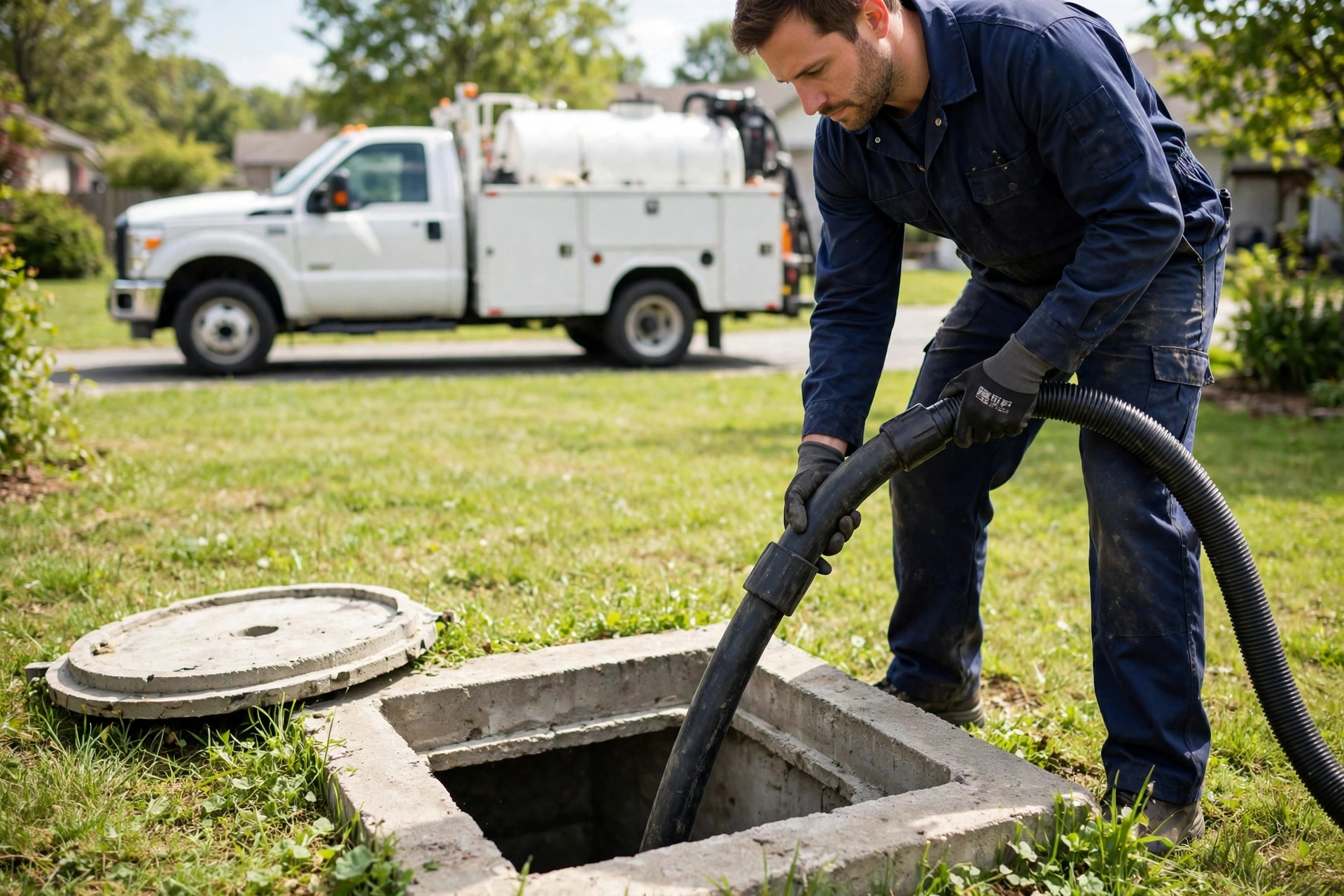
Septic Tank Pumping
Routine pump-outs that remove sludge and scum and keep your system running the way it should.
Learn more →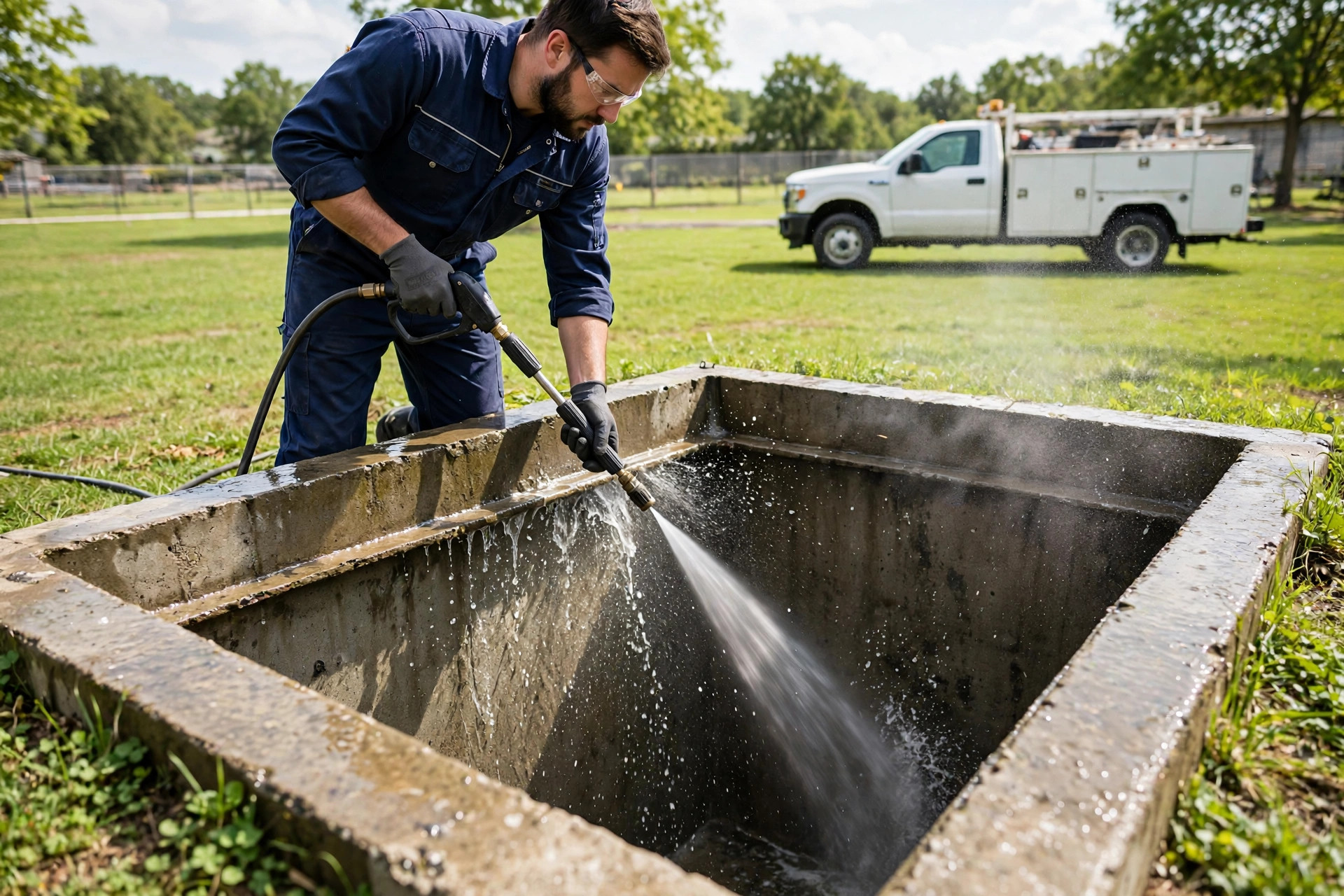
Septic Tank Cleaning
A deeper service for neglected tanks: full pump-out plus breaking up compacted sludge and washing down the interior.
Learn more →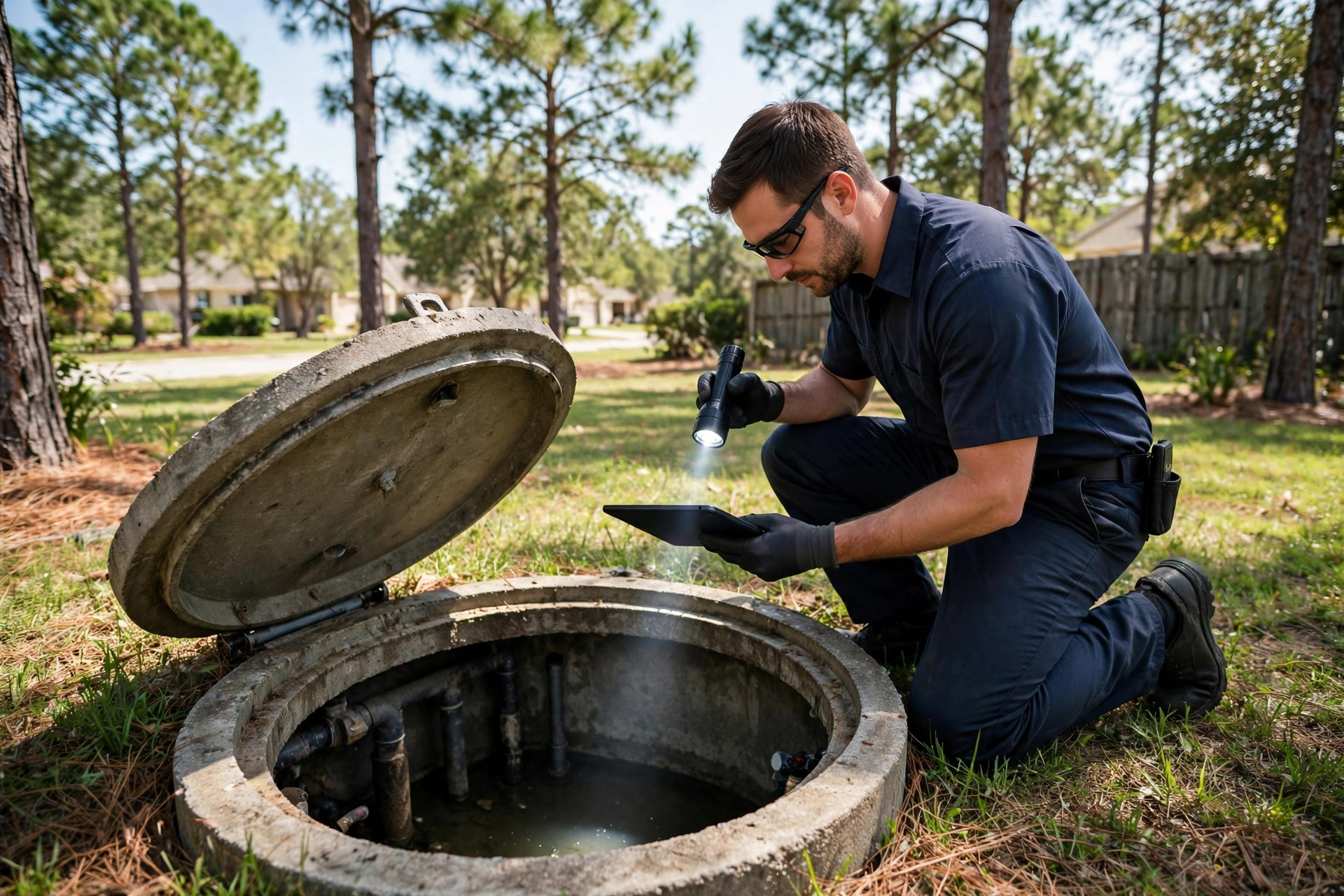
Septic Tank Inspections
Including pre-purchase inspections for homebuyers who want to know what they are getting into before closing.
Learn more →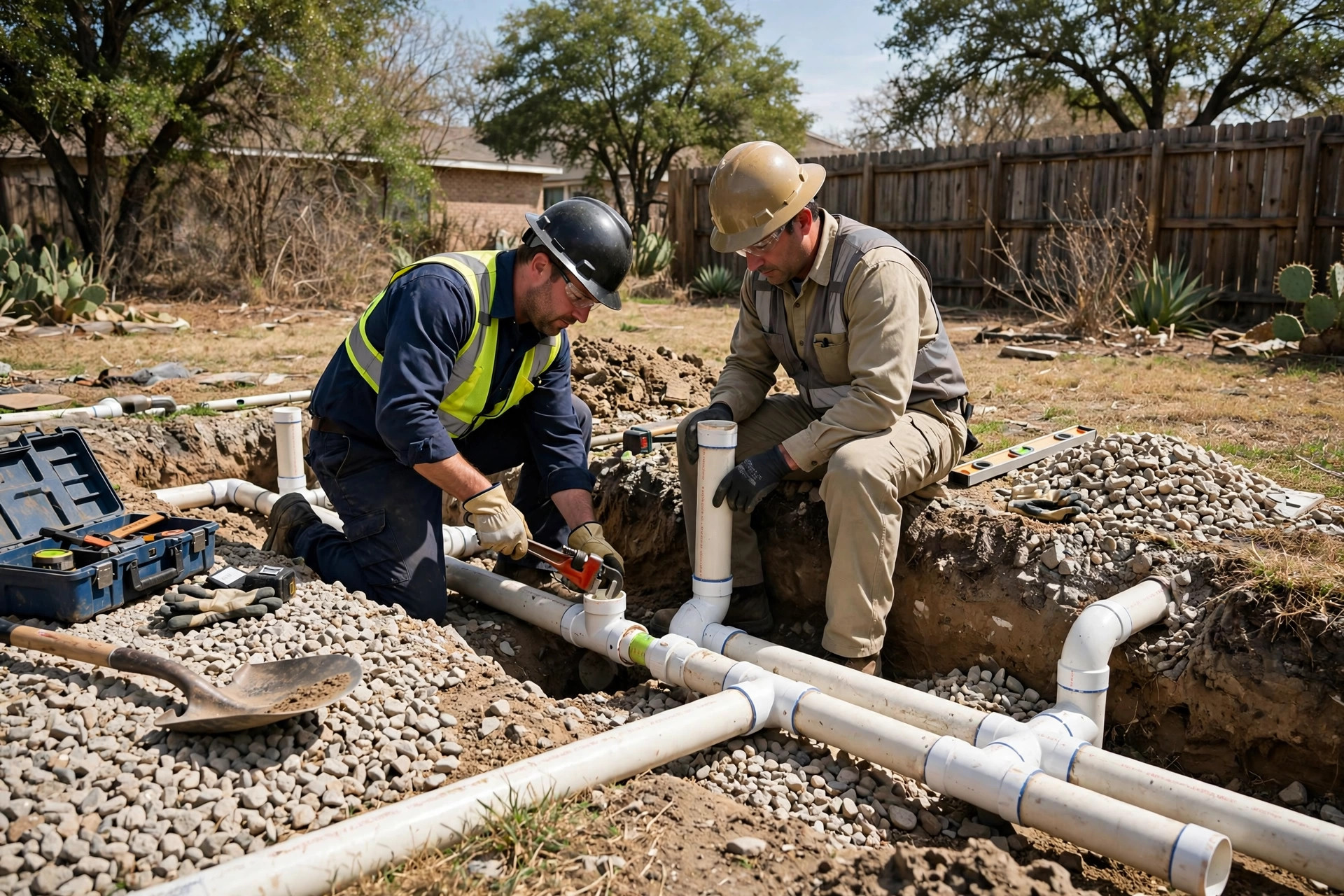
Septic System Repair
Drain field trouble, broken baffles, crushed lines, and failing aerobic system components.
Learn more →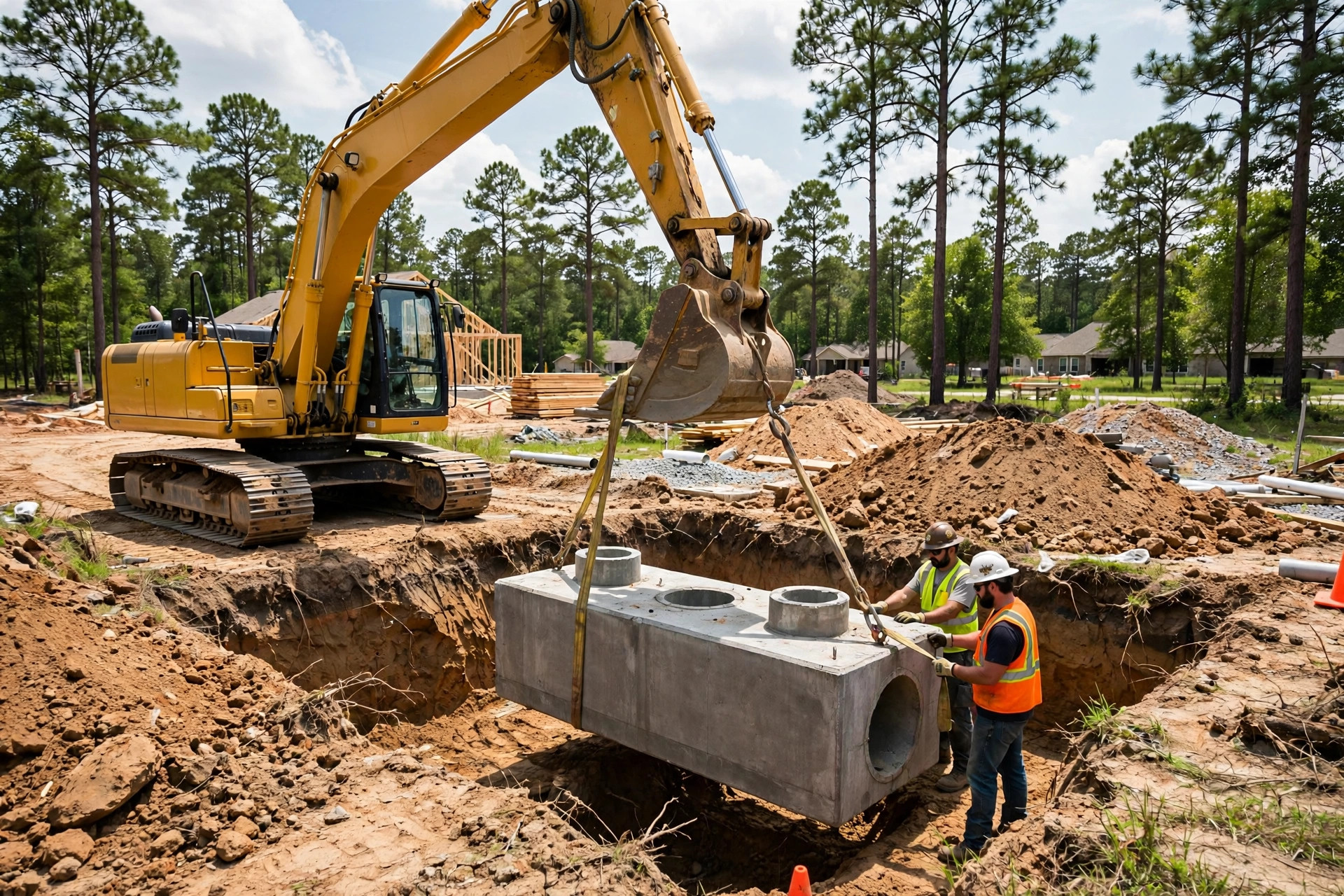
Septic Tank Installation
New systems for new builds and replacements, conventional or aerobic, permitted for Smith County.
Learn more →Not sure what your system needs?
Call Tyler Septic Pros at (903) 555-0147 and tell us what's going on — we'll point you in the right direction.
How Often Should You Pump Your Septic Tank in Tyler?
For a typical household, every three to five years is the standard guidance. But “typical” covers a lot of ground. A family of five with a garbage disposal and a washing machine running daily will fill a tank faster than a retired couple in the same size house. If you can't remember the last pump-out — or you just moved in and the seller couldn't tell you — it's smart to start with a pump-out and an inspection so you know your baseline.
Homes with aerobic treatment units are a special case that's common around Smith County. Those systems still have tanks that need pumping, and Texas rules require them to stay under a maintenance contract with regular checkups. If you have spray heads in your yard, you have an aerobic system — ask us about keeping it on schedule when you call.
Signs Your Tank Is Due for a Pump-Out
- Drains running slow throughout the house, not just one sink
- Gurgling sounds from toilets or drains
- Sewage odors inside the house or out in the yard
- Soggy ground or standing water near the drain field
- Grass that's unusually lush or green over the drain field area
- A toilet or tub backing up — don't wait on this one, call right away
One slow sink is usually a plumbing clog. Slow drains everywhere at once usually means the tank. If you're seeing several of these signs together, schedule a septic tank pump-out before a small problem becomes a messy one.
What Happens During a Pump-Out, Step by Step
If you've never watched a septic tank get pumped, it's simpler than most people imagine — but the details matter, because shortcuts here are what let small problems hide. Here's how a proper pump-out goes:
1. We locate the tank. A surprising number of Tyler-area homeowners don't know exactly where their tank sits, and that's normal. We locate it with probing and any available property records. If it's your first visit with us and the lids are buried, expect some digging up front.
2. We open the main access lids. This is worth saying plainly: a real pump-out opens the main lids over both compartments, not just the little inspection port on top. Pumping through the port alone leaves the far compartment half full. That's a common shortcut, and we don't take it.
3. We pump both compartments completely. The truck hose removes the sludge from the bottom, the scum layer from the top, and the liquid in between — everything, from both sides of the tank.
4. We inspect the baffles and the filter. With the tank empty and visible, we check the inlet and outlet baffles or tees for cracking, corrosion, or collapse. If your system has an effluent filter — many newer Smith County tanks do — we clean it out, because a clogged filter can mimic a full tank.
5. We check the drain field area. A quick walk of the field for wet spots, odors, or surfacing effluent tells us whether the tank is the whole story or part of a bigger one. If we see trouble, we'll say so and recommend a proper inspection before you spend money on anything else.
6. We backfill and clean up. Lids go back on, grade is restored, and the yard is left the way we found it. Most residential pump-outs take about an hour once we're set up, and you don't need to be home as long as we can reach the tank and run hose to the truck.
How Much Does Septic Tank Pumping Cost in Tyler, TX?
Let's talk numbers plainly. A typical residential pump-out in the Tyler area runs a few hundred dollars — for a standard, accessible 1,000-gallon tank, most jobs land in the $350–$600 range. We give you a firm quote before the truck rolls, and the price doesn't change mid-job unless we find something you approved extra work for.
A few honest factors move the number up or down:
- Tank size in gallons. Larger tanks take more truck capacity and more time. A 1,500-gallon tank serving a big household costs more than a 1,000-gallon tank serving a couple.
- Lid accessibility and depth. If the lids are buried a foot or more down, digging them up takes time. Installing risers — extensions that bring the lids up to ground level — costs a few hundred dollars but makes every future visit faster and cheaper.
- Extra services. Effluent filter cleaning, tank locating, and washdown work are separate from a standard pump-out. We'll always tell you what's included in the quote and what's optional.
One more honest note: a suspiciously cheap pump-out is often a pump-out done through the inspection port only. You pay less because you got less. Ask what the visit includes before you book — with us or with anyone.
Conventional vs. Aerobic Systems in Smith County
About half the calls we take involve aerobic systems, so this is worth understanding. A conventional system is the classic setup: tank plus a gravity-fed drain field of trenches. It works where the soil drains well enough to absorb and filter the effluent.
An aerobic treatment unit (ATU) uses an aerator — essentially a small air pump — to add oxygen to the wastewater, treating it more thoroughly, and then distributes the treated water through spray heads in the yard. If you have pop-up sprinklers spraying your lawn that are connected to your septic, you have an aerobic system. They're common across Smith County because our East Texas clay often won't support a conventional drain field — the soil test fails, so an aerobic system is what the property gets.
Here's the part many aerobic owners were never told: Texas requires aerobic systems to stay under an ongoing maintenance contract with a licensed maintenance provider. That means scheduled checkups, testing, and reports — not optional, not just a good idea. (The one legal exception written into the Texas rules: an owner who completes the TCEQ-approved maintenance training can self-maintain instead — in practice, nearly everyone uses a licensed provider.) Whether anyone mentioned it at closing or not, the rule applies. If your aerobic system hasn't been serviced in a while, call us and we'll explain in plain terms what the state expects and help you get current. And yes, aerobic systems still have tanks that need periodic pumping — the maintenance contract and the pump-out are two separate things.
Smith County Specifics: Clay Soil, Heavy Rain, and Permits
A septic system in East Texas lives a harder life than the same system would in sandier country, and it helps to know why.
The clay. East Texas soil is heavy clay that percolates — drains — slowly even in good weather. That means your drain field absorbs effluent at a slower rate than the textbook systems were designed for. It's not a flaw in your system; it's the ground we live on. It also means neglected maintenance shows up here sooner than in well-drained soil.
The rain. Piney Woods weather delivers long, heavy rainfall seasons. When the ground around your drain field is saturated for weeks, the field can't take water from the tank as fast as the house sends it. The system backs up on itself — slow drains, gurgling, odors — even when the tank isn't technically full. If your symptoms flare after a wet stretch, tell us; it helps with diagnosis.
The permits. Repairs and new installations in Texas need proper permits through the local permitting authority, and new systems need a site evaluation before anything is designed. We handle that process as part of repair and installation work — evaluation, permit, installation, and final inspection, in that order. An unpermitted system is a problem that compounds every year you own the property, especially when you go to sell.
Pumping vs. Cleaning — What's the Difference?
People use the words interchangeably, but they're different services and it matters which one you actually need.
Pumping removes the sludge, scum, and liquid from your tank. For a tank that's been serviced on schedule, pumping is all it ever needs. It's the routine maintenance that keeps everything working.
Cleaning is pumping plus the hard work: breaking up compacted sludge that a pump hose alone leaves behind, washing down the tank's interior walls, baffles, and tees, and inspecting the now-visible tank structure. Cleaning earns its keep on tanks that were neglected for many years, where the sludge layer has compacted into something closer to wet concrete.
Our honest take: most homeowners need cleaning exactly once — as a reset for a long-neglected tank — and then regular pumping so they never need it again. If someone tries to sell you a cleaning every visit on a well-maintained tank, get a second opinion. Our cleaning service page explains when it genuinely makes sense.
Septic Pumping FAQs for Tyler Homeowners
How often should I pump my septic tank in Tyler?
Every three to five years covers most households. A bigger family, a garbage disposal, or heavy laundry days push you toward the three-year end; a small household with moderate water use can often stretch toward five. The real answer for your house comes from measuring sludge levels at each visit — which is why we check and record them, so you're working from data instead of a calendar guess.
How much does a pump-out cost?
Most standard residential pump-outs in the Tyler area run a few hundred dollars — commonly $350–$600 for an accessible 1,000-gallon tank. Deeper buried lids, larger tanks, and extra services like riser installation move the price. We quote before we start, so the number is never a surprise.
Do I need to be home during the pump-out?
Not necessarily. As long as we have access to the tank area and a clear path for the truck hose, we can do the whole job while you're away. Just let us know when you book.
What if I don't know where my tank is?
That's common, and it doesn't slow us down. We locate tanks regularly with probing and available property records. If the lids are buried, we'll dig them up — and we may suggest risers so nobody has to dig again.
Will pumping fix my slow drains?
If the cause is a full tank, usually yes. But if the drains are still slow after a pump-out, the problem is downstream — a line issue or a struggling drain field — and pumping again won't fix it. We diagnose honestly rather than selling you a second pump-out you don't need.
Do aerobic systems still need pumping?
Yes. Aerobic treatment units still have tanks that collect sludge, and they need periodic pump-outs just like conventional systems — separate from the ongoing maintenance contract Texas requires. If you've got spray heads in your yard, plan on both.
What shouldn't go down my drains?
The short list: grease, "flushable" wipes (they aren't), feminine products, paper towels, coffee grounds, and harsh chemical drain cleaners. Your septic system is a living biological process — what kills bacteria or won't break down eventually ends up costing you.
How do I make my system last longer?
Pump on schedule, spread out heavy water use (space the laundry loads), know where your tank and field are, don't drive vehicles over them, and call when you notice changes early instead of hoping they go away. Most of the expensive failures we see started as small, cheap-to-fix problems that sat for a year.
Proudly Serving Tyler and Nearby Smith County Towns
We're based around Tyler and travel throughout Smith County, including Whitehouse, Lindale, and Bullard — plus Flint, Winona, Troup, Arp, and Chandler. If you're on septic anywhere near Tyler, give us a call and we'll get you on the schedule.
What to Expect When You Call
You'll talk to a real person who knows septic systems. We'll ask what's going on — slow drains, an odor, a real-estate deadline, or just “it's been years.” We'll give you a straightforward price for the visit before we roll a truck. On arrival, our technician locates your tank, opens the lids, pumps both compartments, and takes a look at the baffles and the tank's overall condition. You'll hear plainly what we found and what, if anything, needs attention next. No scare tactics, no upsell marathon — just an honest read on your system and a clear price for any work you approve.
Ready to schedule your pump-out?
Tyler Septic Pros serves Tyler and all of Smith County. Same-week appointments are usually available.